What does the law actually say?
Section 56(2) says an operator must keep a record in the form the council prescribes and enter, before each journey begins, the particulars of every private hire booking it accepts, including jobs taken on for another operator. The council decides which particulars through licence conditions.[1]
Which details do councils usually require?
Councils' 2026 returns to the Department for Transport list the same core set again and again: passenger name, the date and time the booking was made, the pick-up date and time, pick-up point, main destination, driver name and licence number, and vehicle registration. Some add the fare, the vehicle plate number or who took the call.[2]
Each council page shows how many of these details that council asks for.
How do operators keep them in practice?
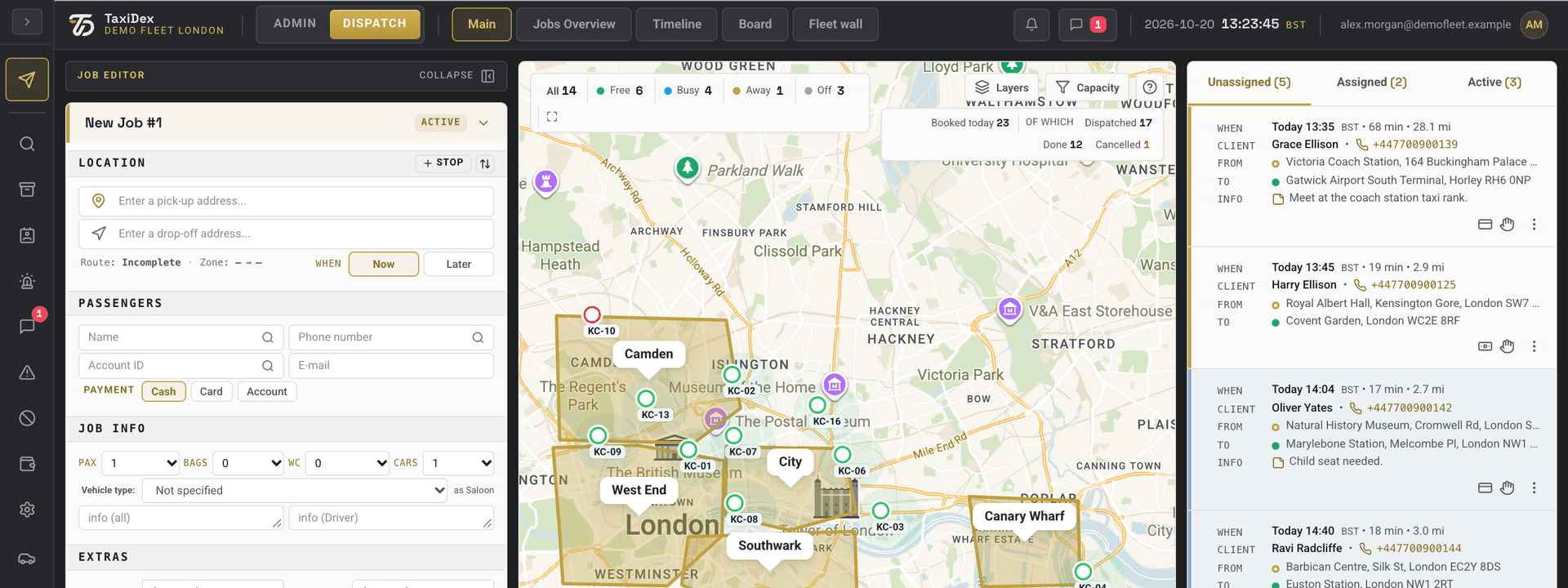
Most now keep them in dispatch software rather than a paper book: every job already holds the passenger, times, addresses, driver and vehicle, so the record exists the moment the job is created. TaxiDex keeps a searchable, exportable record of every booking (booking records).
Frequently asked questions
How long must booking records be kept?
The 1976 Act leaves it to the council's licence conditions; check yours. Many councils set a period in their operator conditions.
Do sub-contracted jobs need a record too?
Yes. Section 56(2) covers bookings accepted from the hirer and bookings undertaken at the request of another operator.
Sources
Fees and rules change. Each source is the official page we read, with the date we read it; check it before you apply or pay.